

How Caterpillar Is Using Industrial AI to Build Smarter and More Connected Operations
Caterpillar is entering a different stage of its technology evolution. For years, the company has built deep experience in automation within mining, an environment where harsh conditions, safety requirements, labor shortages, and repetitive routes have made autonomous machines a practical fit. Now, Caterpillar is beginning to apply those lessons to more dynamic environments such as construction sites, quarries, and broader industrial operations.
The important point is not simply that Caterpillar is using artificial intelligence. Many companies are doing that. What makes this case more relevant is that Caterpillar is working to bring AI into physical operations where decisions do not happen inside a clean digital interface. They happen around machines, job sites, operators, technicians, assets, safety requirements, changing conditions, and real business processes.
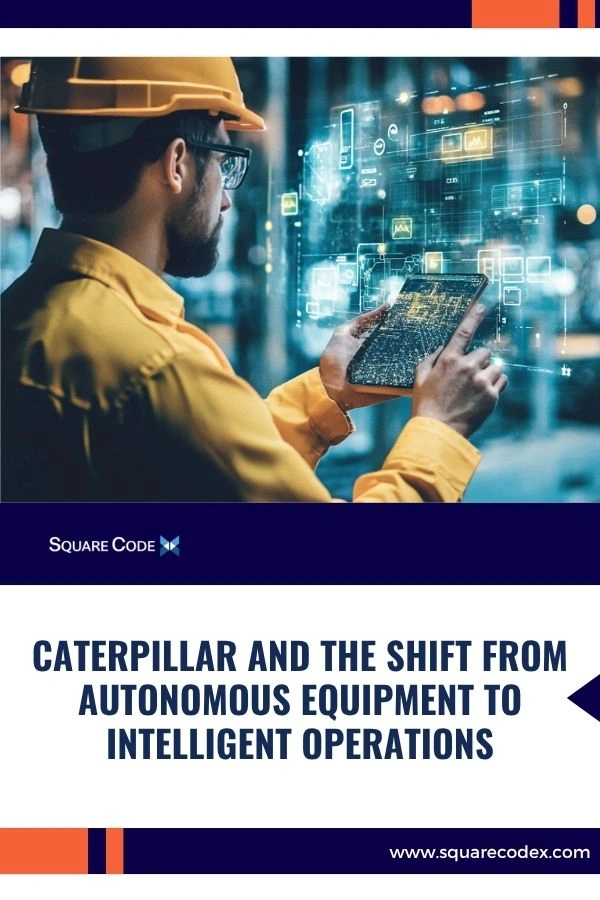
One visible example is Cat AI Assistant, a tool designed to help technicians, operators, and customers access technical information through voice commands. A technician working near a machine can ask for repair procedures, identify possible issues, or check required parts before starting a job. The value does not come only from the conversational interface. It comes from the information behind it: proprietary data, connected assets, manuals, parts catalogs, operating history, and decades of accumulated technical knowledge.
Are you looking for developers?
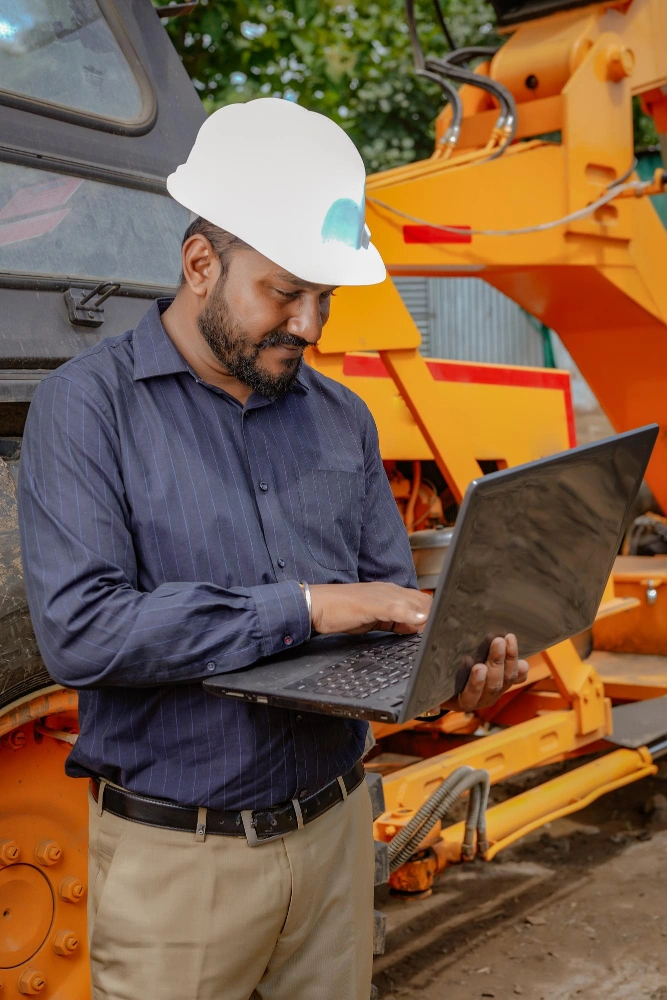
Caterpillar is also applying AI to site scanning, digital twins, manufacturing operations, and internal software development. The company has discussed the use of AI agents to modernize legacy code, generate and test software, and detect defects earlier. These examples show a broader direction. AI is not being treated as one isolated feature. It is beginning to touch maintenance, operations, training, development, decision-making, and the way industrial knowledge is converted into digital systems.
Caterpillar’s mining experience gives the company a practical foundation. It is not approaching autonomy only as a theoretical software problem. It has spent years operating machines in environments where reliability matters. Still, transferring those lessons into construction or quarry operations is not automatic. A mine may offer more controlled routes and repeatable processes. A construction site changes more frequently. Terrain, schedules, contractors, equipment, and daily work conditions can shift quickly.
That is where the real enterprise challenge appears: integrating technology into existing workflows. Automating a machine does not automatically transform an operation. For AI to create value, it has to connect with how teams already work, how decisions are made, what data is available, and how people collaborate with intelligent systems.
This also explains why proprietary data is becoming such an important advantage. In industrial environments, knowledge does not live only in clean databases. It also lives in experienced operators, technicians who recognize failure patterns, supervisors who understand the pace of a job site, and teams that know when a digital recommendation does not fit the reality on the ground. Caterpillar’s strategy highlights that human expertise remains part of the system, even as automation grows.
Are you looking for developers?
AI adoption also changes workforce roles. An operator who once controlled a single machine may eventually monitor multiple machines from a remote center. A technician may use an assistant to diagnose issues faster. A software team may rely on AI agents to review or modernize code, but still needs human judgment to validate quality, safety, and context. Training becomes as important as the technology itself.
That lesson applies far beyond Caterpillar. Industrial companies looking at AI often focus first on the model or the tool. The harder work is usually integration. AI systems may need to connect with maintenance platforms, inventory systems, sensors, mobile applications, planning software, ERPs, field operations tools, dashboards, and internal knowledge bases. If those systems do not communicate well, the intelligence remains incomplete. The model may respond, but the operation does not improve.
This is why industrial AI is becoming a software engineering challenge. It requires data pipelines, backend systems, APIs, cloud infrastructure, user interfaces, monitoring, security, QA automation, and DevOps practices. It also requires teams that can translate operational knowledge into software without disrupting the business.
Are you looking for developers?

For companies outside Caterpillar, the broader takeaway is clear. Implementing AI is not only about acquiring tools or connecting models. It is about building the technology foundation that allows AI to work inside real business processes. That means organizing data, modernizing systems, integrating platforms, and designing software that can evolve as operations change.
This is where companies like Square Codex can become relevant for organizations pursuing similar transformations. Not because Square Codex worked on Caterpillar’s initiatives, but because many companies need to complement their internal teams with specialized software development, system integration, platform modernization, and technical engineering capacity.
Through Staff Augmentation and Nearshore Software Development, Square Codex can help organizations add talent in backend development, API integration, data engineering, enterprise applications, DevOps, QA automation, and digital product development. In industrial AI projects, that support can be useful when a company understands its operation deeply but needs additional engineering capacity to turn that knowledge into scalable software.
Caterpillar’s case shows that the competitive advantage will not come only from having access to AI. It will come from integrating AI correctly into real operations. The companies that move forward will be those that connect data, software, processes, and human expertise with discipline. In that journey, specialized teams like Square Codex can help turn technology ambition into systems that work inside the business, not only in isolated demonstrations.