

Sustainability and Trust at the Center of Enterprise AI
The Antalya Pledge and a new UNESCO study highlight two connected challenges for AI adoption: measuring its environmental footprint and ensuring that its climate-related outputs are reliable.
Artificial intelligence is becoming part of the global climate discussion for two different reasons. It can support research and decision-making, but the infrastructure required to develop and operate AI also consumes considerable resources.
At COP31 in Antalya, the Turkish presidency and the International Telecommunication Union (ITU) are launching the Antalya Pledge on AI, a voluntary initiative intended to reduce AI’s environmental footprint while supporting climate action.
The pledge addresses how organizations design, purchase, power, deploy, measure, and manage AI systems. It also raises an important question for businesses expanding their AI capabilities: how can technological progress be balanced with environmental accountability and reliable information?

Are you looking for engineers?
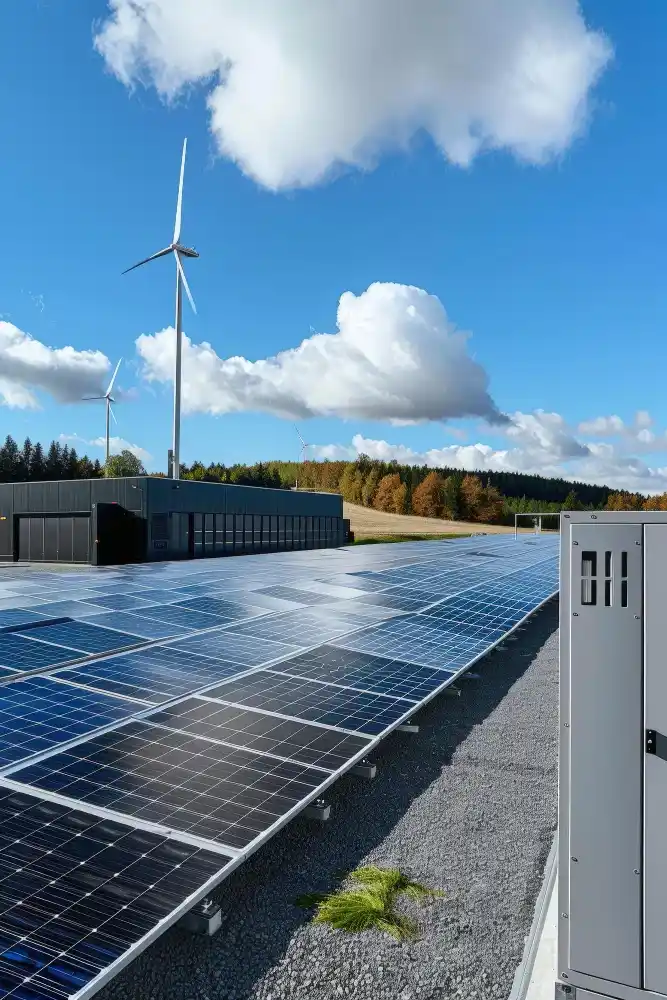
The Antalya Pledge establishes four pillars intended to guide responsible AI development and adoption. The first focuses on energy and infrastructure. It encourages the use of low- and zero-emission energy for AI systems and data centers, improvements in energy and water efficiency, and better integration with sustainable electricity grids.
The second addresses responsible lifecycle management. Beyond operational energy consumption, organizations must consider how equipment is manufactured, purchased, maintained, reused, and eventually discarded. The pledge promotes sustainability considerations in AI procurement and management, including circular approaches to electronic waste.
The third pillar emphasizes environmental assessment and reporting. It encourages organizations to measure and communicate AI’s environmental footprint using standardized methodologies. The fourth concerns financing and capacity building, particularly for developing countries, least developed countries, and small island developing states. Signatories can also make additional commitments involving green data centers, AI skills, and computing capacity.
The pledge is voluntary, not a binding international regulation. Following COP31, participants will be encouraged to continue implementation through the ITU’s Green Digital Action initiative, with annual progress assessments expected through 2030. For enterprises, understanding the AI environmental footprint requires more than reviewing electricity bills. AI infrastructure involves computing resources, cooling requirements, water consumption, hardware procurement, and equipment replacement. These factors can vary considerably depending on how applications are developed and operated.
Are you looking for engineers?
Consistent measurement depends on reliable information. Organizations may need to connect cloud usage records, infrastructure monitoring platforms, procurement systems, and operational databases to understand resource consumption. Data engineering, reporting tools, and monitoring systems can help make this information accessible and traceable.
However, collecting data does not automatically reduce environmental impact. The value lies in helping organizations assess infrastructure decisions, identify relevant trade-offs, and communicate results without making unsupported sustainability claims. UNESCO’s report, Can We Trust AI on Climate?, examines whether AI systems provide reliable information when responding to climate-related questions.
The organization evaluated 33 leading AI systems across 13 languages through 656 policy simulations. According to UNESCO, the evaluated systems sometimes struggled to explain interactions between climate policies, delivered less reliable responses depending on the language used, and abandoned correct information when users challenged their answers.
These findings concern the systems and scenarios examined. They do not establish that every AI model is unreliable or that AI cannot support climate-related work. However, they highlight an important limitation: a convincing response is not necessarily an accurate one. This concern also appeared in the UN Global Initiative for Information Integrity on Climate Change’s priorities presented on November 13 at COP31.
The initiative calls on AI companies to assess and publish findings about their impact on climate information integrity, while also disclosing energy consumption and carbon, water, and land footprints. It encourages governments to consider information integrity in national AI strategies and climate plans.

Are you looking for engineers?

Together, these developments highlight two distinct responsibilities: understanding the resources AI consumes and evaluating whether the information it produces deserves trust. For companies integrating AI into business operations, these discussions have practical engineering implications. Organizations need visibility into computing consumption, dependable data pipelines, and monitoring tools that reveal how applications behave over time.
AI systems used to communicate complex information should also undergo testing across relevant languages, scenarios, and user interactions. Documentation and human review become particularly important when inaccurate outputs could influence consequential decisions.
Cloud engineering, backend development, API integration, and QA automation can support these processes by connecting operational information and making software easier to evaluate and maintain. These are general engineering considerations rather than mandatory requirements established by the Antalya Pledge.
For organizations requiring additional development capacity, Square Codex can provide relevant software engineering support. The Costa Rica-based nearshore development and staff augmentation partner serves North American companies through AI application integration, data engineering, backend and API development, cloud solutions, and QA automation.
Such capabilities can help businesses build observable applications and reliable information flows while retaining responsibility for environmental assessments and governance decisions.
The Antalya Pledge and UNESCO’s research suggest that responsible AI adoption requires a broader understanding of technological performance.
Organizations must be able to examine both the environmental resources their systems consume and the reliability of the information those systems generate. Making those responsibilities part of everyday engineering and operational decisions is what gives AI governance practical meaning.