

McDonald’s Is Turning Transaction Data Into Pricing Recommendations
McDonald’s use of machine learning for menu pricing shows how AI is moving into specific operational decisions, not only generative use cases. The company uses technology that analyzes restaurant transaction data and local conditions to recommend prices for individual locations. According to the provided source, the system processes data from millions of daily transactions across McDonald’s restaurants in the United States and considers factors such as local competition and estimated customer sensitivity to price changes.
The important point is not that an algorithm sets the final price. McDonald’s presents the platform as a decision-support tool. It generates restaurant-level pricing recommendations, which franchisees can consider when setting prices.
That distinction matters for enterprise technology leaders. AI-powered pricing is not simply a model producing an output. It is a software system designed to turn large volumes of operational data into practical recommendations that people can review, accept, adjust, or reject.
The system analyzes existing transaction and pricing data, along with local market signals. It does not use generative AI. It uses machine-learning algorithms to identify patterns that may help estimate willingness to pay at the restaurant level. The source also states that McDonald’s has used some form of AI-assisted pricing technology since at least 2019 and later developed a proprietary system that produces location-specific recommendations.

Are you looking for developers?

This is different from personalized pricing. McDonald’s system is described as estimating willingness to pay at the restaurant level, not using personal customer data to determine what a specific individual should pay. That difference is important because personalized pricing, especially when tied to personal data, is receiving separate regulatory attention.
One of the most relevant aspects of McDonald’s approach is that the technology does not automatically determine final prices. Franchisees remain responsible for pricing decisions, and the platform is optional.
This matters because recommendation systems and automated decision-making are not the same thing. A recommendation system can process more data than a human team could easily review, but human decision-makers still provide context. Operators may understand local customer behavior, competitive pressure, staffing realities, and brand considerations that a model may not fully capture.
The source also notes that McDonald’s monitors differences between recommended prices and prices actually applied. Some franchisees reportedly said they faced pressure to follow recommendations, while McDonald’s rejected that characterization and said operators maintain freedom over final prices. That tension shows why governance is important when AI influences commercial decisions, even if the system is not fully automated.
AI-powered pricing depends on more than a machine-learning model. To support a system like this, companies need data pipelines, transaction processing, backend systems, APIs, analytics platforms, cloud infrastructure, monitoring, security controls, QA, and testing.
Are you looking for developers?
The model is only one component. Data must be collected consistently from restaurants, cleaned, structured, analyzed, and connected to recommendation workflows. Backend systems need to deliver recommendations at the right level of detail. APIs may be required to connect pricing tools with restaurant systems, reporting platforms, and internal applications.
Monitoring also matters. Teams need to understand how recommendations perform over time, where data quality problems appear, and whether system outputs align with business expectations. If a pricing recommendation seems unusual, the issue could come from incomplete transaction data, outdated market signals, incorrect business rules, model drift, or integration problems.
That is why AI adoption in enterprise environments is often a software engineering challenge. The value comes from how well the model connects to reliable data, business logic, operations, and human decision-making.
When AI produces recommendations that affect pricing, governance becomes essential. Companies need role-based access, audit trails, human approval processes, monitoring, transparency, compliance controls, and model oversight. This is not only about regulation. It is about trust. Business users need to know how recommendations should be interpreted, what factors may influence them, and who remains accountable for the final decision.
McDonald’s inclusion of an antitrust compliance warning in the platform shows that pricing systems operate in a sensitive business area. That does not mean the system is anticompetitive. It means organizations using AI for pricing need clear controls around how recommendations are generated, distributed, reviewed, and applied.

Are you looking for developers?
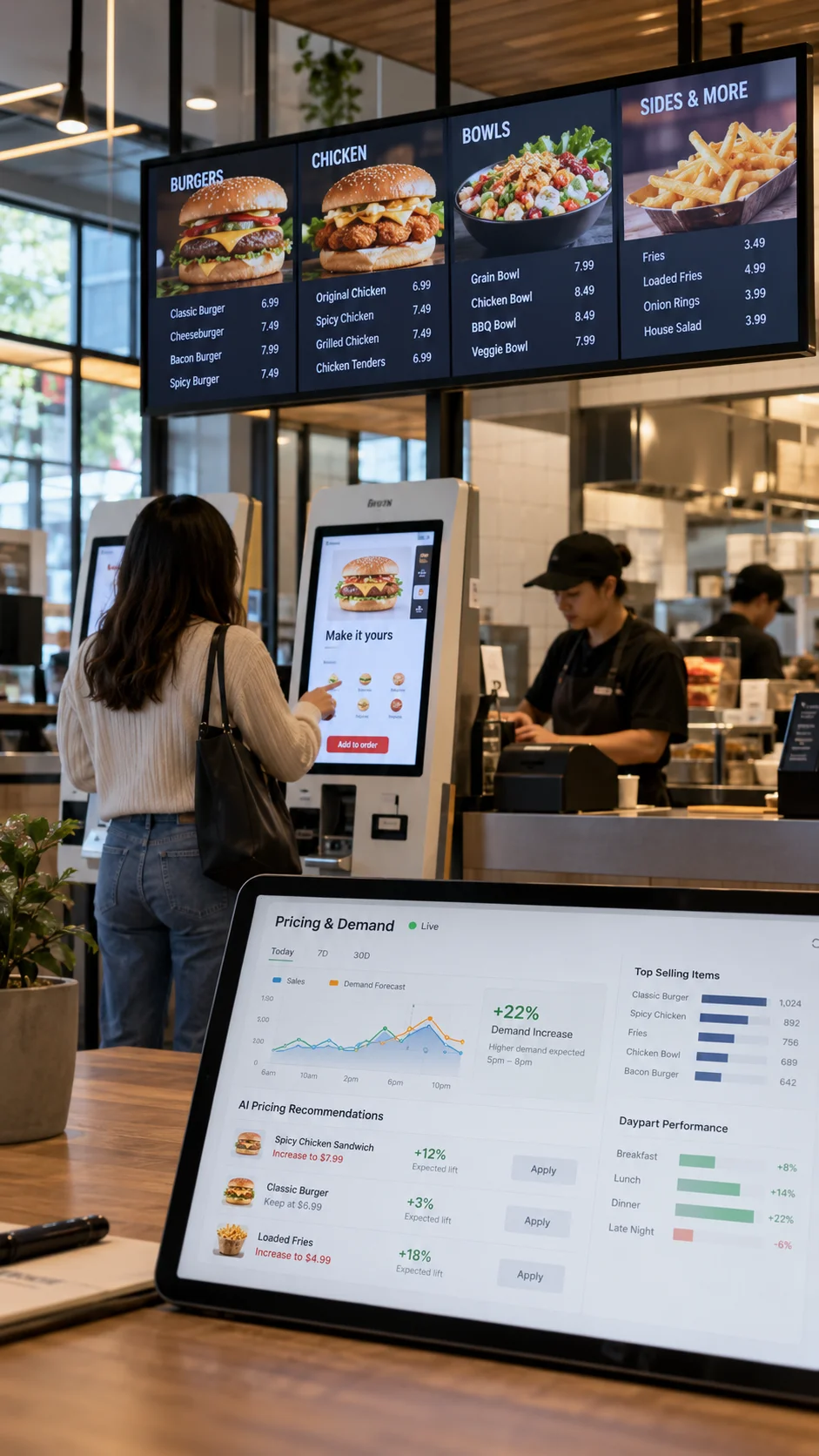
The same principles behind McDonald’s pricing system can apply to other operational decisions. Companies can use AI-powered decision systems for forecasting, inventory planning, demand analysis, recommendations, logistics, and operational optimization. The common requirement is infrastructure. AI can support decisions only when data is available, connected, governed, and integrated into the right workflow. Without that foundation, a model may produce output that is difficult to trust or hard to operationalize.
This is where Square Codex can support companies building similar systems. Square Codex does not work with McDonald’s on this platform, but the case highlights a broader engineering need. Organizations adopting AI-powered pricing, machine-learning applications, or decision-support systems may need additional capacity in backend development, API integration, data engineering, cloud development, DevOps, QA automation, system integration, and enterprise software development.
As a nearshore software development and staff augmentation partner, Square Codex can help companies complement internal teams while keeping product ownership, architecture, and business decisions in-house. The bigger lesson from McDonald’s AI pricing strategy is that enterprise AI value does not depend only on the algorithm. It depends on transaction data, software infrastructure, governance, monitoring, and the ability to place recommendations inside workflows where people still make informed decisions.