

How Physical AI and Edge Computing Are Reshaping Autonomous Systems
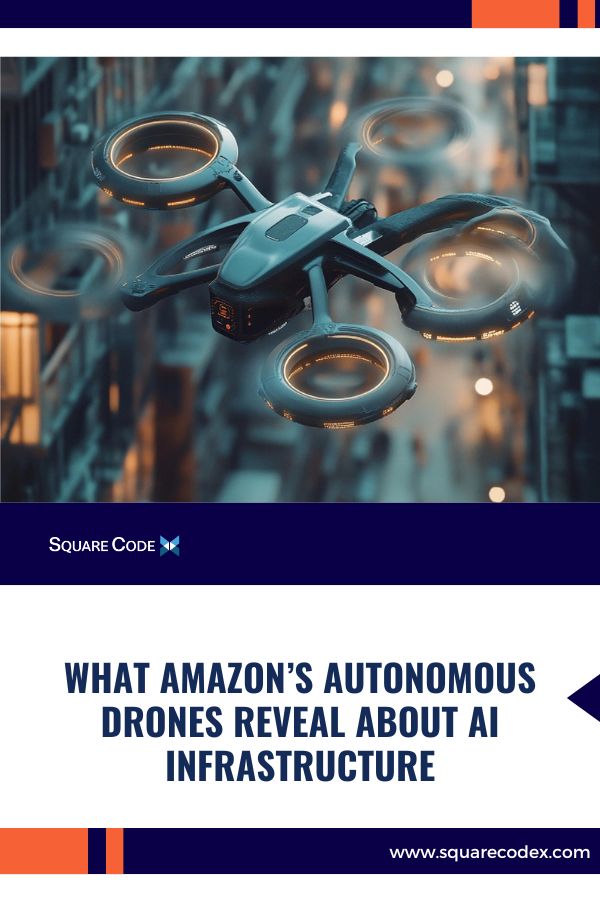
Amazon’s plan to expand Prime Air to nearly 500 cities and towns across the United States during 2026 is more than an ambitious logistics milestone. It shows how artificial intelligence is moving from purely digital environments into physical systems that can perceive surroundings, make decisions, and execute actions in the real world.
Prime Air is designed to deliver eligible packages of up to five pounds, with delivery times that can be as fast as about 30 minutes and often around 60 minutes after checkout. The service is also operating in the United Kingdom, where Amazon has launched drone delivery from its Darlington fulfilment center. In the United States, Prime Air operates under FAA Part 135 certification, the same regulatory framework used for commercial air carriers.
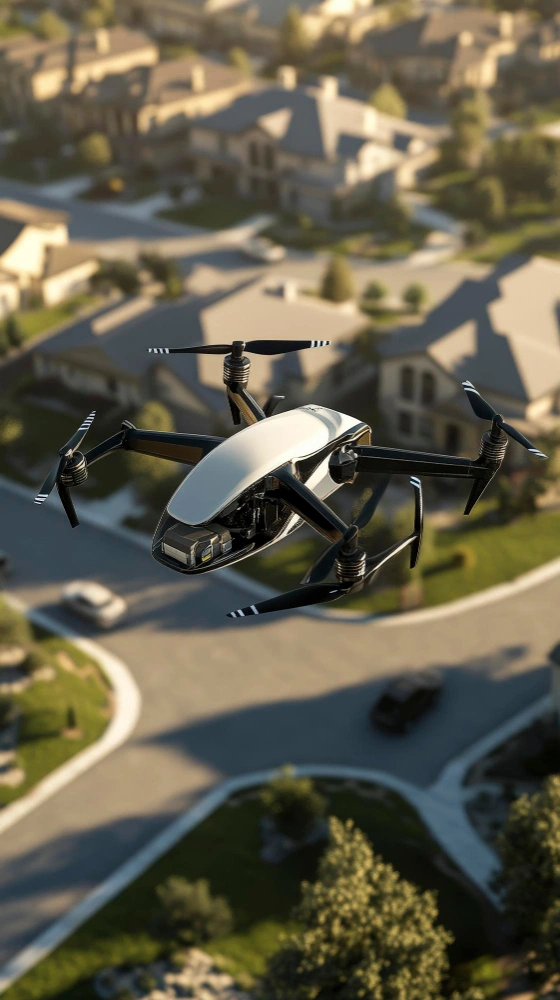
The technology behind the expansion matters. Amazon’s drones use autonomy, cameras, sensors, and a Detect-and-Avoid system to monitor airspace and surrounding conditions. The idea is not that a person manually supervises every movement of every aircraft. The system is designed so drones can make real-time flight decisions within approved operating conditions, including how to detect and avoid obstacles.
Amazon also frames Prime Air as one part of a broader logistics network, not as a replacement for every delivery method. That distinction is important. Drone delivery works best when it complements existing fulfillment, transportation, customer service, and operations systems. The real story is not a single drone carrying a package. It is the software and infrastructure required to make thousands of autonomous deliveries fit into an enterprise logistics machine.
Are you looking for developers?

Prime Air offers a useful example of Physical AI, a category of systems where artificial intelligence interacts directly with physical environments. Unlike a chatbot or recommendation engine, a drone must interpret the world around it, react to changing conditions, and execute decisions that have operational and safety implications.
This requires several technologies working together. Artificial intelligence helps the system interpret data and support decision-making. Computer vision and sensors provide environmental awareness. Edge computing allows certain decisions to happen close to the device instead of relying entirely on the cloud. Cloud infrastructure supports fleet coordination, updates, monitoring, analytics, and integration with Amazon’s broader operations.
The lesson extends well beyond delivery drones. Manufacturing companies are using connected machines and vision systems to inspect quality, detect anomalies, and support predictive maintenance. Retailers are exploring intelligent stores that use sensors, cameras, inventory systems, and real-time analytics. Logistics companies rely on route optimization, warehouse automation, tracking systems, and demand forecasting. Healthcare, automotive, smart buildings, and industrial IoT are all moving toward systems where software does not simply display information, but helps physical operations respond more intelligently.
Physical AI is different from traditional enterprise software because the margin for delayed or incomplete information is smaller. A system operating in the physical world must process data quickly, handle exceptions, and maintain reliability under changing conditions. A drone may face weather variation, obstacles, delivery area constraints, route changes, connectivity issues, or operational exceptions. An autonomous machine in a factory may encounter sensor noise, equipment wear, or unexpected process behavior.
Are you looking for developers?
That is why scaling physical AI is also a software engineering challenge. The hardware may be visible, but the intelligence depends on the software ecosystem around it. A pilot can be impressive with a small number of devices and controlled routes. Scaling to hundreds of cities or thousands of operations is different. Each additional market introduces new variables: local infrastructure, customer behavior, delivery density, weather patterns, regulatory expectations, support needs, and integration requirements.
For Amazon, Prime Air has to work inside an existing logistics environment. Orders must be placed through customer applications. Items must be identified as drone-eligible. Fulfillment systems must prepare packages. Drones must operate safely. Customers must receive updates. Support teams must handle exceptions. Operational teams need monitoring, maintenance processes, and performance data.
That means the autonomous system is not isolated. It depends on APIs, backend infrastructure, data pipelines, cloud services, monitoring platforms, security controls, and enterprise integrations. If one layer fails, the customer does not experience a “model issue.” They experience a delayed delivery, a failed order, an unclear status update, or a service interruption.
The same principle applies to any company adopting AI, automation, computer vision, robotics, or connected devices. A retailer introducing smart inventory systems needs data integration between sensors, store operations, e-commerce, warehouses, and analytics. A manufacturer using vision-based inspection needs real-time processing, quality workflows, cloud storage, dashboards, and human escalation. A logistics provider using autonomous systems needs routing data, fleet management, customer communication, and exception handling.
Autonomy also creates new responsibilities. Monitoring must show whether failures come from a sensor, an AI model, a backend service, a network connection, or an external system. Fault handling must define what happens when the system cannot act safely. Security must protect devices, APIs, data flows, and operational controls. Human oversight must remain part of the process when automated decisions require review or intervention.
Are you looking for developers?

This is where companies often discover that AI adoption is not mainly about buying a model or deploying a device. It is about building software architecture that connects intelligent systems to real operations.
Amazon demonstrates what becomes possible when AI, software, sensors, and physical infrastructure work together. For other organizations, reaching that level of automation requires strong software engineering capabilities to integrate intelligent technologies into business environments. Square Codex becomes relevant in that context as a nearshore software development partner that helps companies expand engineering capacity through staff augmentation, custom software development, backend development, API integration, data engineering, cloud development, computer vision software development, and AI application development.
The expansion of Prime Air points toward a broader shift in enterprise technology. The next stage of AI will not remain limited to screens, text, or digital recommendations. It will increasingly involve systems that perceive, decide, and act in the physical world. Companies that want to move in that direction will need more than hardware and isolated AI models. They will need software architecture, cloud and edge computing, secure integrations, reliable data pipelines, monitoring, and engineering teams capable of turning intelligent capabilities into operations that can scale. Square Codex fits naturally into that evolution by helping organizations build the software foundation required for AI to work beyond the prototype and inside real business systems.