

Why AI Ordering Depends on Backend and Integrations
McDonald’s decision to test ArchIQ, an AI-powered drive-thru ordering and restaurant operations system developed with Google, is a useful case study because it exposes what most companies learn the hard way. AI-powered ordering is only the visible layer. The real transformation happens behind the scenes through integrations, backend engineering, cloud infrastructure, APIs, data pipelines, and AI orchestration. A smooth conversation at the speaker is impressive, but it is the last step in a chain that has to be correct, fast, and consistent across thousands of locations.
That is also why many “AI pilots” feel great in a controlled demo and then struggle in real operations. The drive-thru is a high-pressure environment where latency, availability, and data accuracy show up immediately. A model can understand a sentence, but it cannot magically know which menu items are in stock, which promotions apply, how the kitchen is flowing, or what the store’s local constraints are unless the system is integrated into those sources of truth. This is where execution matters more than model selection. Square Codex fits into this reality as a Costa Rica-based nearshore staff augmentation company that helps North American businesses build the engineering foundation for AI integration, particularly backend systems, APIs, and data flows that keep real-time experiences reliable.
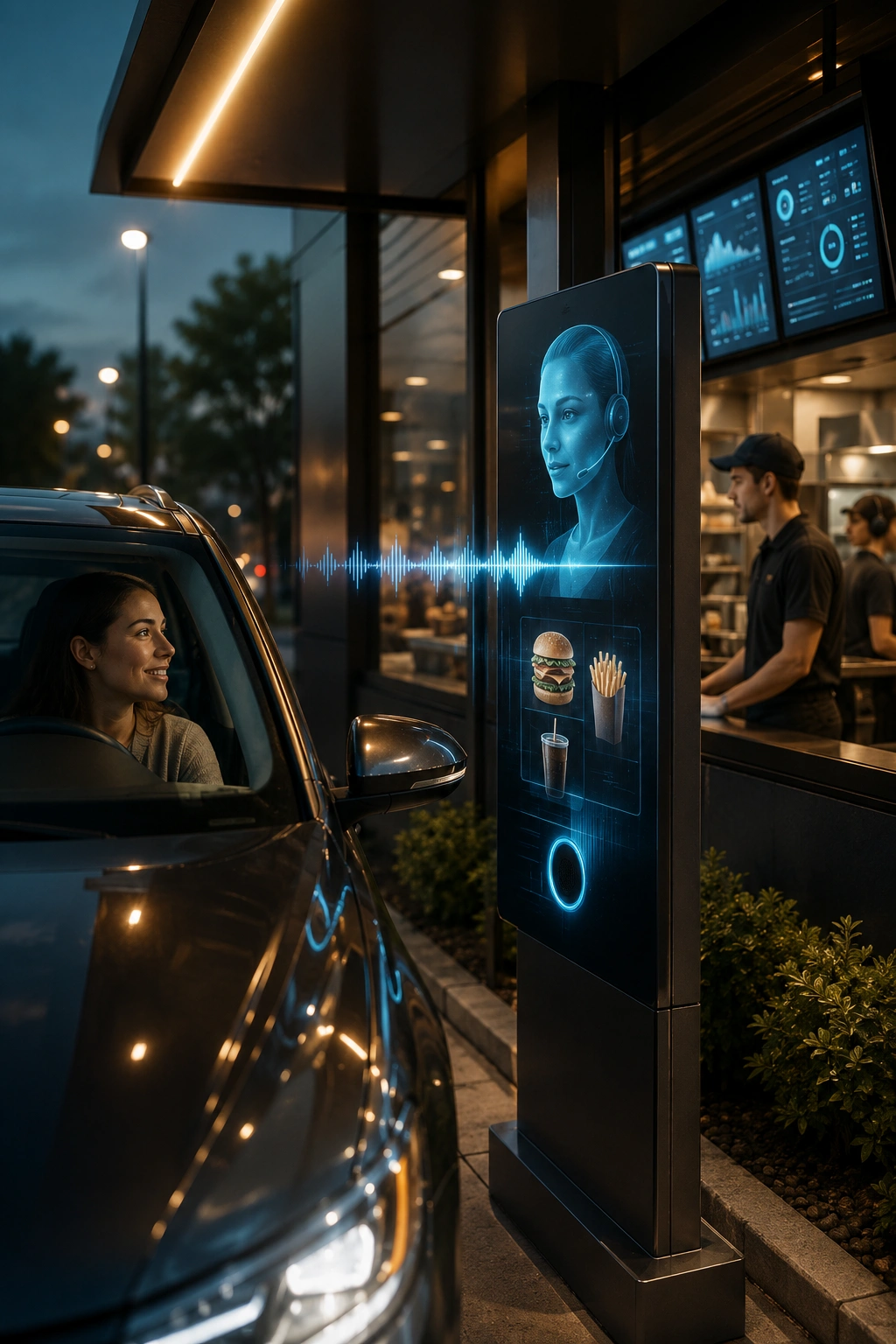
What McDonald’s is effectively testing with ArchIQ is not just conversational AI, but the ability to convert intent into a transaction without breaking the operational loop. A customer asks for a meal with substitutions, a different size, or a dietary constraint. The system must interpret that request, validate it against menu rules, check availability, apply pricing and promotions correctly, and then create an order that the kitchen can execute. If any link in that chain is weak, the assistant becomes a fast way to produce wrong orders, not a faster way to produce good ones.
Are you looking for developers?

This is why backend engineering becomes the backbone of AI ordering. The assistant needs dependable services for menu configuration, pricing logic, promos, inventory signals, order routing, and payment handoff. In many restaurant environments these systems have grown over time, sometimes through acquisitions, sometimes through local vendor choices, and often with different data models across regions. Making ArchIQ work at scale requires the unglamorous work of normalizing those interfaces, building stable APIs, and establishing clear contracts for how data moves. AI Integration Services, in practice, means making sure the model can safely call the right tools, with guardrails that prevent it from taking actions it should not.
Real-time processing is not optional in this setting. Drive-thru throughput is sensitive to seconds, and restaurant operations are driven by events: an item is marked unavailable, a line backs up, a fryer is down, a shift changes, a delivery arrives late. A robust system treats these as event-driven signals that update the assistant’s context continuously. Without that, the AI risks making decisions based on stale conditions. This is also where orchestration becomes important. The system must sequence actions, confirm constraints, and degrade gracefully when dependencies are slow or temporarily unavailable. A conversational layer that cannot fall back safely will create more operational friction than it removes.
The cloud layer and DevOps practices determine whether a solution like ArchIQ can scale beyond a handful of stores. Traffic patterns in restaurants are spiky and predictable only in broad strokes. Breakfast, lunch, late-night peaks, promotions, and seasonal surges all change request volume. Cloud infrastructure helps absorb variability, but reliability comes from engineering discipline: CI/CD that ships changes safely, observability that shows where latency and errors originate, and incident response practices that restore service quickly. Cost management is part of the same discipline. When AI inference becomes part of a core workflow, cost per interaction is no longer theoretical. It affects margins, especially in a business where volume is high and unit economics are tight.
Are you looking for developers?
Data Science and Analytics is the second half of the story. AI ordering generates operational data that can improve the business if it is captured cleanly. Patterns in misorders, common clarifications, substitution frequency, and abandonment points are signals that feed training, UX improvements, and staffing decisions. But those insights require data pipelines that are structured, consistent, and monitored. If logs are fragmented or schemas change without governance, analytics becomes guesswork. The best implementations close the loop: they use production data to improve models, refine rules, and adjust operational playbooks without destabilizing the system.
For companies trying to implement similar capabilities, the toughest part is rarely the model. It is the integration effort across legacy platforms, the reliability of APIs, the governance of permissions, and the operational maturity to run AI as part of production. This is where staff augmentation becomes a practical strategy. Hiring experienced backend engineers, cloud engineers, data engineers, and integration specialists quickly is difficult. Waiting months for the perfect internal team often means the project loses momentum. Nearshore teams can help when they integrate directly into the client’s engineering workflows, codebases, and delivery cadence.
Square Codex supports this execution model by embedding nearshore engineers from Costa Rica into North American teams working on AI integration, backend engineering, and cloud operations. In restaurant or retail-like environments, that typically means building and hardening APIs, connecting systems of record, setting up event-driven flows, and implementing observability so production issues can be diagnosed rather than debated. The value is not speed for its own sake, but the ability to move from pilot to stable operations without interrupting day-to-day delivery.
Are you looking for developers?
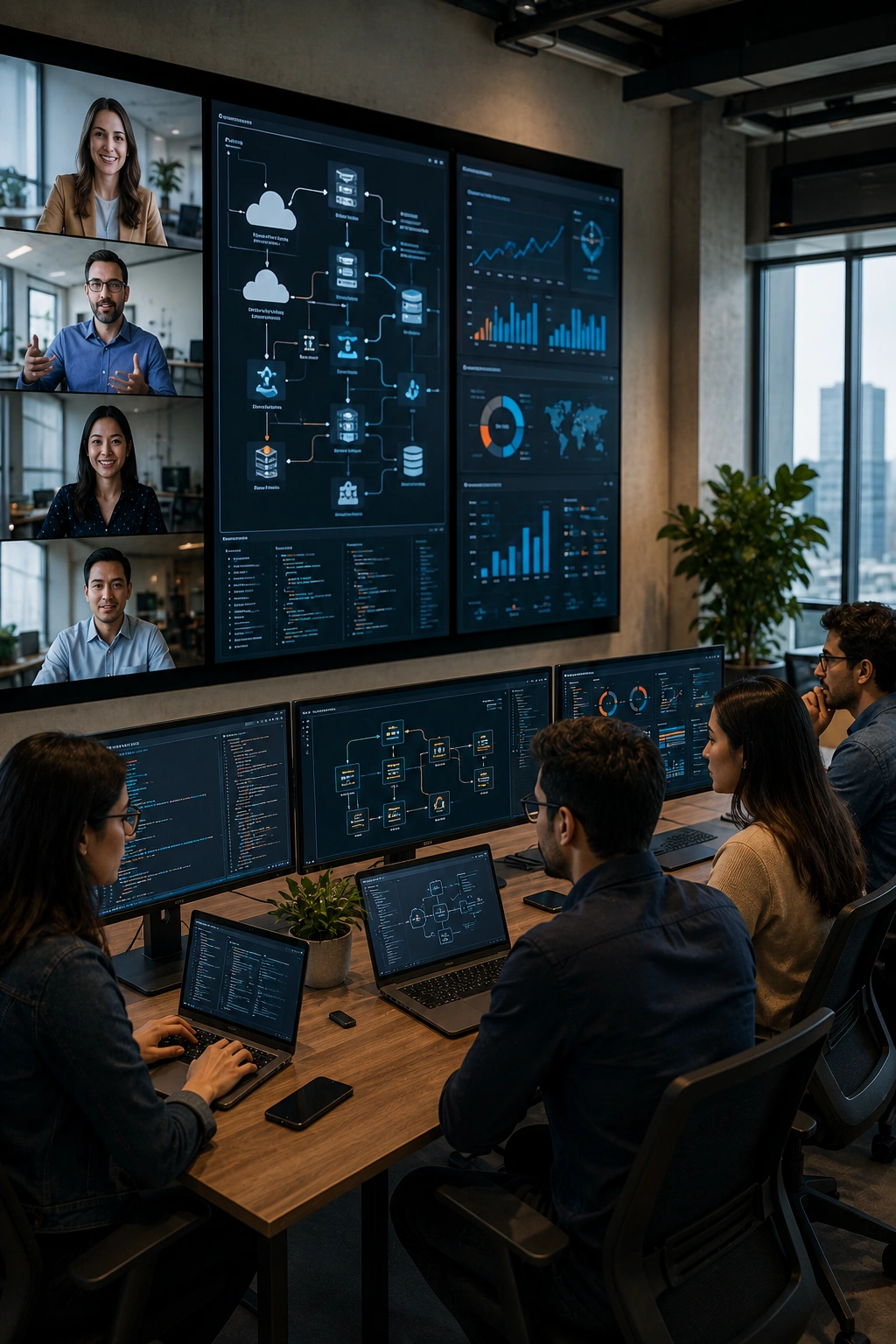
Square Codex also tends to be involved after launch, when reality starts teaching lessons that no lab can simulate. Production brings edge cases: accents and noise in audio, unusual menu requests, partial outages, inconsistent inventory updates, and operational policies that vary by location. Continuous improvement requires MLOps thinking, but also software engineering habits: versioned prompts and policies, automated tests around business rules, and controlled releases. When AI becomes part of the operating system of a business, the engineering ecosystem around it determines whether the experience stays consistent or degrades over time.
McDonald’s testing ArchIQ highlights the direction of enterprise AI: machine-to-machine coordination inside real operations. The customer hears a voice. The business runs a chain of integrations, validations, and real-time decisions. Companies that treat AI as an overlay will keep hitting the same wall. Companies that invest in AI Integration Services as engineering work, backed by solid backend systems, cloud reliability, data pipelines, and governance, will be the ones that turn AI into measurable operational advantage.