

Infrastructure Challenge Behind Enterprise AI
Microsoft’s withdrawal as anchor customer from Nscale’s planned £2 billion AI data center in Essex highlights a growing challenge in artificial intelligence infrastructure: computing capacity cannot expand independently of the electricity and operational systems required to support it.
The facility in Loughton was intended to support AI chips, model training, and digital services. However, UK Power Networks informed Nscale that sufficient electricity might not be available until the early to mid 2030s.
Nscale remains committed to the project and is exploring alternative power sources and faster grid connections. Its relationship with Microsoft also continues through projects in Norway, Portugal, and the United States.
For enterprise technology leaders, the situation raises an important question. How can organizations plan AI infrastructure when computing requirements, energy availability, deployment schedules, and software demands do not always move at the same pace?

Are you looking for developers?
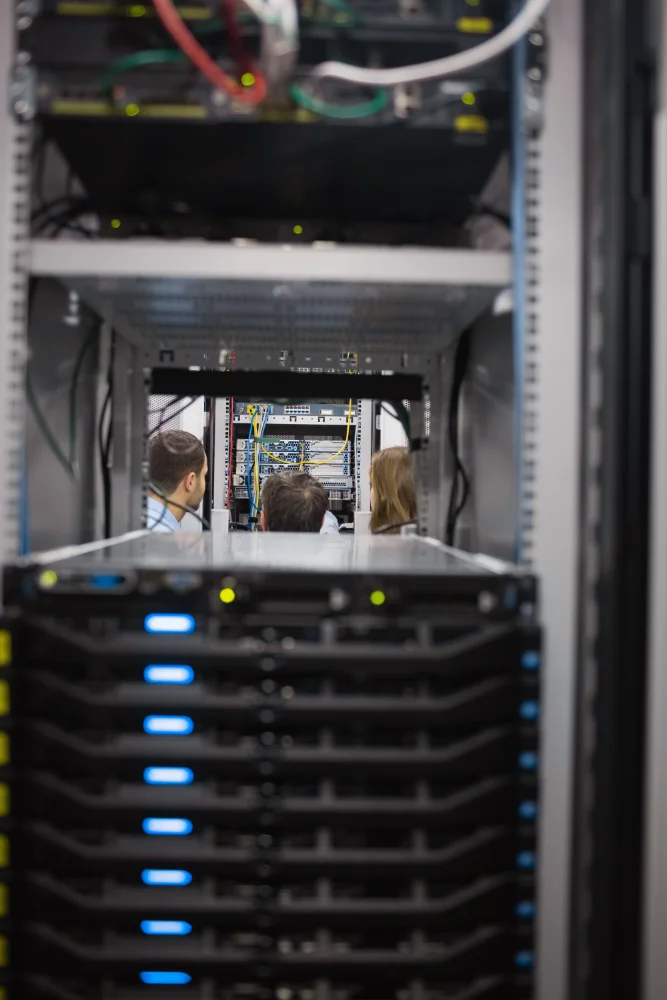
AI infrastructure planning has traditionally focused on processors, servers, networking, and cloud capacity. Those components remain essential, but their availability does not guarantee that a data center can begin operations. Electricity supply, grid connections, construction schedules, and supporting infrastructure can determine whether computing resources become operational.
Peter Griffiths, Founder and Executive Chairman of Argyll Data Development, identified electricity availability as a central obstacle to British AI infrastructure expansion.
He also pointed to Scotland, where he says more than a thousand clean energy projects and 23 proposed hyperscale data centers face connection queues despite the country’s significant wind and hydro resources. These observations illustrate the difference between having renewable energy resources and having the infrastructure required to deliver electricity where and when it is needed.
For organizations investing in AI, delays can affect infrastructure planning, technology procurement, project timelines, and the ability to coordinate computing capacity with business demand.
Software optimization cannot eliminate electricity constraints. However, disciplined engineering can help companies make better decisions about how existing resources are allocated and used. The Microsoft and Nscale development also raises questions about sovereign AI infrastructure.
For enterprises, especially those operating in regulated industries, sovereignty involves more than determining where servers are physically located. Organizations need to understand where information is processed, who can access systems, how applications are managed, and what happens when a supplier, service, or power connection becomes unavailable.
This creates a direct connection between AI infrastructure and enterprise software architecture. Data residency requirements may influence cloud deployment decisions. Identity and access management determine who can interact with sensitive systems. Backend services and APIs control how information moves between applications, while monitoring tools provide visibility into operational activity.
Are you looking for developers?
Reliable infrastructure also requires contingency planning. Companies should understand which workloads are critical, how dependencies between services affect availability, and whether applications can recover when infrastructure experiences interruptions.
These considerations do not automatically establish sovereignty or compliance. They provide the technical foundations organizations need to evaluate and demonstrate operational control. As computing infrastructure becomes more complex, software engineering plays an increasingly important role in operational efficiency. AI applications depend on backend systems, APIs, cloud environments, data pipelines, monitoring, and deployment processes.
When those components are poorly integrated, organizations may experience unnecessary processing overhead, unreliable information flows, or difficulty identifying the causes of failures. Workload orchestration can help engineering teams manage computing resources according to application requirements. Observability provides information about system performance, resource consumption, and operational issues.
Data engineering supports reliable access to information, while DevOps and automated testing help teams deploy software changes and maintain operational consistency. The challenge becomes particularly important when businesses operate across several cloud environments or depend on multiple infrastructure providers.
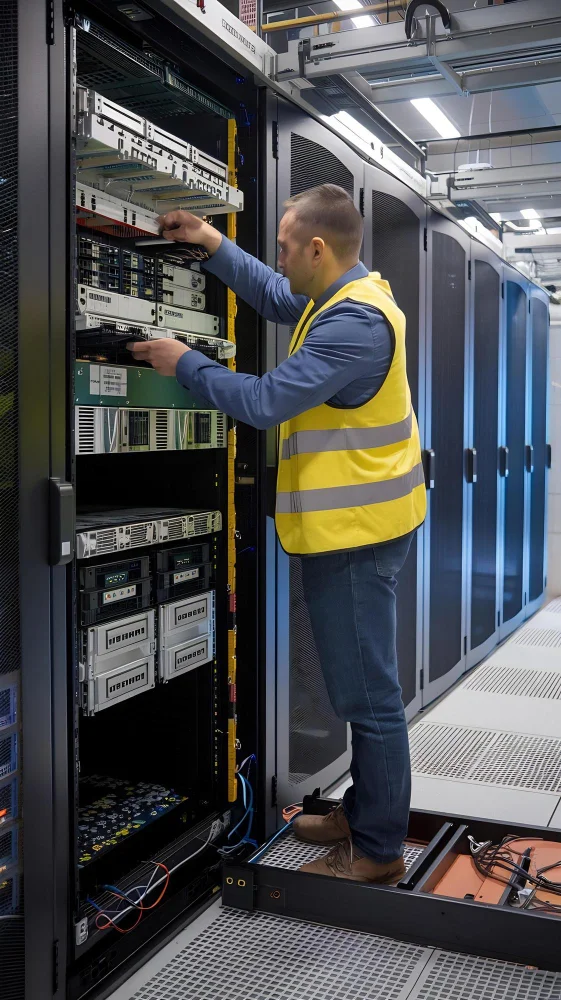
A well-designed application should not assume every service will remain available under every condition. Engineering teams need clear dependency management, error handling, monitoring, and recovery processes. These capabilities cannot replace physical infrastructure investment, but they can make enterprise applications more maintainable and resilient.
Are you looking for developers?

Loaded models, production workloads, user activity, and infrastructure dependencies create operational challenges that cannot be evaluated through theoretical models alone. For organizations deploying AI, security involves controlling system access, protecting sensitive information, monitoring behavior, and maintaining reliable software throughout the application lifecycle. The broader lesson is that AI infrastructure, cybersecurity, and software engineering are increasingly connected.
The infrastructure challenges illustrated by Microsoft’s Nscale decision are relevant to organizations building AI applications, even when they are not developing large data centers themselves.
Companies may depend on cloud providers for computing resources while remaining responsible for integrating AI with business applications, data platforms, internal workflows, and security controls. This is where specialized engineering partners such as Square Codex can provide practical support.
As a Costa Rica-based nearshore software development and staff augmentation partner serving North American companies, Square Codex helps organizations expand their engineering capacity for custom software development, backend systems, API integration, data engineering, cloud development, DevOps, QA automation, and AI application integration. The objective is not to solve electricity shortages or provide physical data center infrastructure. It is to help businesses develop reliable software that connects applications, data, and computing environments while internal teams retain ownership of product strategy and architecture.
Microsoft’s withdrawal from the Essex project illustrates a broader reality: enterprise AI growth depends on the coordination of physical infrastructure, energy availability, software systems, and operational planning.
Companies cannot control every external infrastructure constraint. They can, however, prepare applications that are maintainable, observable, adaptable, and aligned with realistic business requirements. As AI adoption expands, strong software engineering will remain essential to making computing investments useful, resilient, and sustainable.