
Burger King and Real Time AI: Operational Improvement or Digital Surveillance?
Burger King’s decision to introduce an artificial intelligence chatbot designed to monitor interactions between employees and customers has ignited a debate that stretches well beyond the fast food industry. On the surface, the initiative appears straightforward: improve service quality, identify gaps in customer care, and reinforce operational standards across thousands of daily interactions. Yet beneath that practical objective lies a broader signal. Artificial intelligence is steadily moving into the core of everyday operations, functioning in real time and entering spaces once shaped almost entirely by human judgment.
Understanding the business context helps explain the move. Large restaurant chains operate with tight margins, high employee turnover, and constant pressure to deliver consistent service across locations. Even modest improvements in customer experience can translate into measurable gains in loyalty and revenue. A system capable of analyzing conversations, spotting recurring service weaknesses, or recommending corrective actions offers the promise of efficiency and standardization. From a corporate perspective, the chatbot is framed as a support mechanism, a digital layer that strengthens quality control rather than replacing human workers.
The controversy emerges when automation begins to resemble surveillance. Monitoring workplace conversations, even in the name of service improvement, touches on sensitive issues of privacy, trust, and company culture. AI shifts from being an invisible analytics tool in the background to an active presence evaluating behavior as it happens. At that point, the conversation is no longer purely technical. It becomes deeply human. How far can a company automate oversight before it undermines employee confidence?
Are you looking for developers?
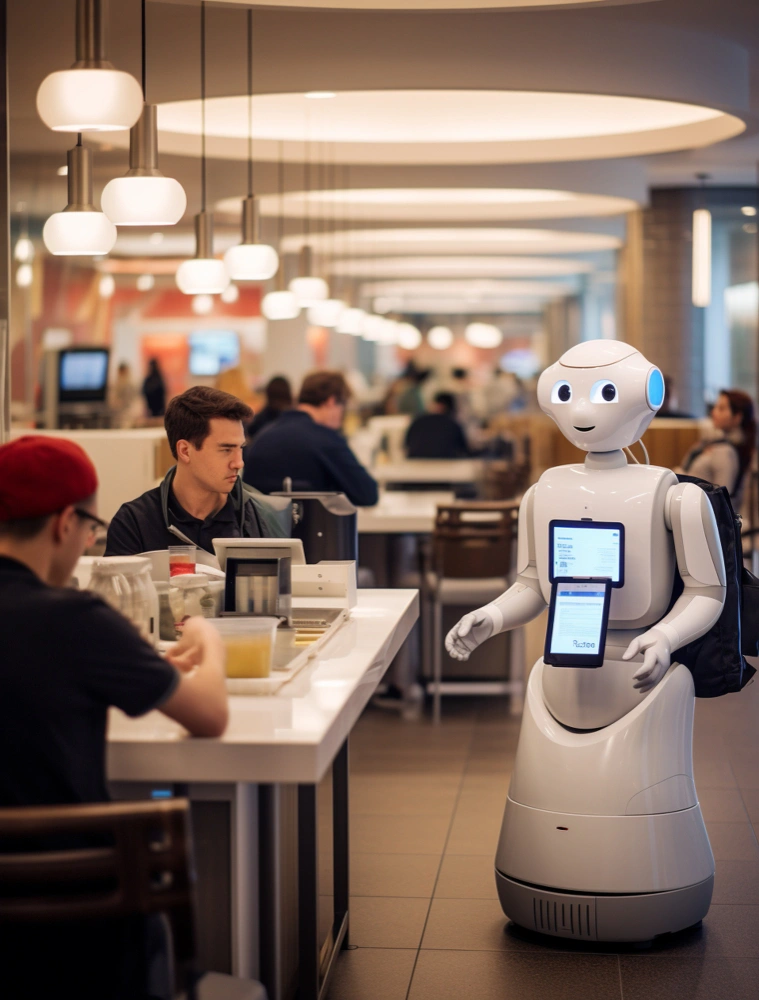
What makes the Burger King case particularly revealing is the way it illustrates AI’s transition from retrospective analysis to real time operational intervention. Traditionally, businesses reviewed performance after the fact through reports and audits. Now, an AI driven chatbot can generate immediate alerts, offer suggestions during an interaction, or escalate concerns before they grow into larger problems. The organization is not simply analyzing yesterday’s data. It is adjusting today’s operations while they unfold.
This shift carries meaningful cultural implications. Introducing AI into frontline operations demands clarity of purpose and transparent communication. Employees need to understand what data is being collected, how it is used, and what boundaries exist. Without that clarity, technology can be perceived as a tool of control rather than support. Governance becomes central. Decisions about data retention, access rights, monitoring limits, and audit trails are just as important as the sophistication of the algorithm itself.
There are also substantial technical considerations. Integrating a chatbot into existing customer service platforms, internal databases, and operational systems requires a solid architectural foundation. The quality of AI generated insights depends directly on the quality and consistency of underlying data. Poor integration can lead to fragmented information or misleading conclusions. Artificial intelligence does not compensate for structural weaknesses in technology infrastructure. In fact, it can amplify them.
Are you looking for developers?
For organizations navigating this transformation, modernization is essential. Companies must examine how data flows across departments, how automated decisions are recorded, and how access is controlled. Square Codex has supported businesses facing similar challenges as they embed AI into operational environments. Through custom software development, platform integration, and enterprise automation, it helps design solutions that fit within existing ecosystems rather than layering new tools on outdated systems. The emphasis is on thoughtful integration that aligns with both operational goals and governance standards.
The Burger King initiative also highlights how quickly AI is entering domains traditionally defined by human interaction. Customer service, quality supervision, and performance evaluation have long relied on direct managerial observation. Now they are increasingly supported by algorithms capable of processing vast volumes of interaction in seconds. The advantages in scalability and consistency are clear. The challenge lies in managing the emotional and cultural impact of this evolution.
Cybersecurity adds another layer of complexity. Systems that analyze conversations or handle sensitive operational data must meet strict security and compliance requirements. A breach in this context would affect not only customers but employees as well. Square Codex can play a role in helping organizations design secure architectures, implement controlled API integrations, and establish continuous monitoring practices that protect information without disrupting daily operations.

Are you looking for developers?

Beyond the immediate headlines, Burger King’s move reflects a structural shift in how companies operate. Artificial intelligence is no longer confined to analytics departments or research initiatives. It is becoming embedded in daily workflows and frontline interactions. This reality demands responsible leadership, clear policies, and a deliberate integration strategy that balances technological capability with human considerations.
The fundamental question is not whether AI should be adopted, but how. Poorly planned implementations can generate resistance and erode trust. Well designed systems, supported by strong governance and open communication, can become genuine allies in improving processes and enhancing customer experience.
Burger King’s decision is not an isolated experiment. It is a sign of where operational management is heading. AI is moving from analyzing what has already happened to shaping what happens in real time. As companies navigate this transition, they will need to balance efficiency with empathy, oversight with trust. Competitive advantage will not depend solely on technological sophistication, but on the ability to integrate these tools with sound judgment and respect for the people who power the business every day.