
How the Nvidia Meta Deal Impacts Business AI
The multi-year agreement between Nvidia and Meta for the purchase of millions of artificial intelligence chips confirms a trend that had already become clear: AI infrastructure has moved to the center of global technological transformation. Beyond the scale of the contract, what truly matters is the type of technology involved. Architectures such as Blackwell, Rubin, Grace, and Vera are not simple hardware upgrades. They are systems designed to support demanding workloads, both for training and deploying advanced models, with significant improvements in energy efficiency and performance.
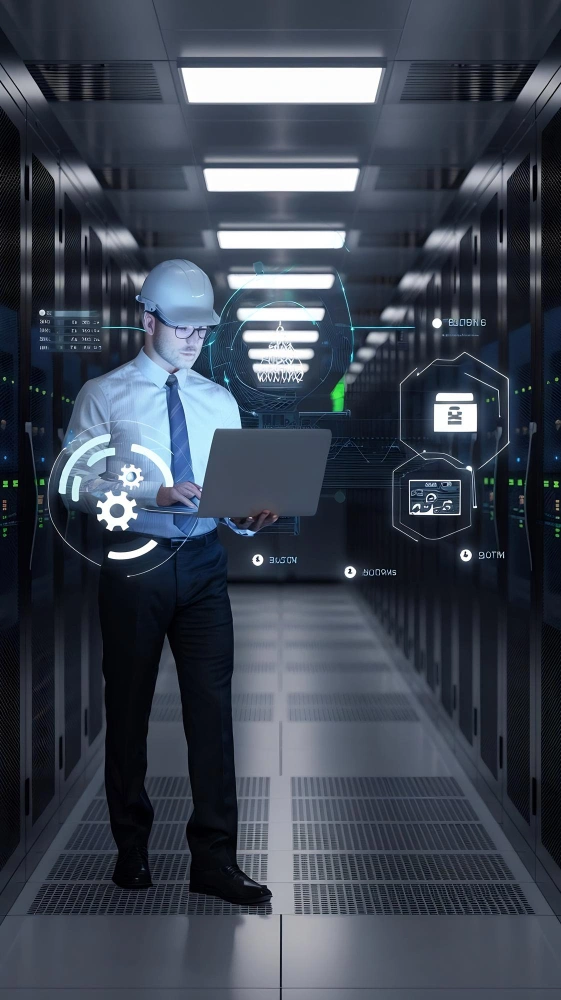
This move is part of a competitive landscape where computing capacity makes the difference. Data centers are no longer just facilities that house servers. They have become highly specialized environments built for parallel processing, high power density, and the management of massive volumes of data. In this context, the partnership between Nvidia and Meta does more than secure access to cutting-edge chips. It strengthens Meta’s position in large-scale training, inference, and experimentation.
Are you looking for developers?
The impact extends far beyond these two companies. When a company the size of Meta secures the supply of millions of specialized chips, it sends a clear signal to the market: controlling technological infrastructure is strategic. This also pushes other global players to reinforce partnerships and accelerate investments in more efficient and sustainable data centers. Competition in artificial intelligence no longer depends solely on developing better models, but on having the operational capacity to run them consistently, efficiently, and at controlled cost.
For companies outside the circle of tech giants, this reality has direct implications. Industries such as finance, retail, logistics, and healthcare increasingly rely on AI-driven solutions to optimize processes, improve customer experience, and reduce errors. However, access to advanced infrastructure alone does not guarantee results. Implementing AI in corporate environments requires a technological architecture capable of integrating legacy systems, ERP platforms, internal tools, and distributed data flows.
In practice, the challenge lies in turning hardware advances into concrete business automation. Access to more powerful models is not enough if data remains fragmented or systems do not communicate effectively. A financial institution seeking to automate risk processes must ensure traceability and regulatory compliance. A retailer implementing recommendation engines must integrate inventory, purchasing behavior, and logistics in real time. Infrastructure provides the foundation, but architecture and execution determine business impact.
Are you looking for developers?
In this environment, specialized technology partners become essential. Square Codex has worked with North American companies to modernize their architectures so they can take advantage of artificial intelligence without compromising stability or security. Through software development, staff augmentation, and nearshore development models from Costa Rica, the company integrates with internal teams to design scalable solutions aligned with real operational needs. Adopting advanced infrastructure like that enabled by Nvidia and Meta requires precisely this practical approach: connecting existing systems, organizing data, and ensuring models operate under enterprise-grade standards.
The evolution of hardware also brings renewed focus to energy efficiency and data center sustainability. Architectures such as Blackwell and Grace aim to deliver higher performance with lower energy consumption, a critical factor in a context where energy has become a strategic variable. For organizations deploying artificial intelligence across multiple regions, optimizing consumption and managing workloads effectively can make the difference between a profitable initiative and an unsustainable one.
This is where the integration of infrastructure and operations becomes meaningful. Square Codex supports not only the initial implementation phase but also the continuous improvement of systems through monitoring, process optimization, and incremental adjustments that keep performance aligned with business goals. Digital transformation does not happen in a single moment. It unfolds through coordinated steps that require technical discipline and long-term vision.

Are you looking for developers?

The agreement between Nvidia and Meta also highlights another reality: advanced infrastructure tends to concentrate in the hands of those capable of investing at scale. This creates challenges for mid-sized and large enterprises competing in fast-moving markets. The answer is not necessarily to replicate those massive investments, but to design intelligent architectures that leverage available infrastructure and combine it with effective automation strategies.
Ultimately, the global competition in artificial intelligence is shaped both by hardware innovation and by organizations’ ability to implement it with strategic intent. Infrastructure is the starting point, but real value emerges when that technological power translates into more agile processes, better-informed decisions, and superior experiences for customers and users. The alliance between Nvidia and Meta underscores the importance of computing as a strategic resource. For the rest of the market, the challenge is to integrate coherently, execute with precision, and turn technological capacity into sustainable competitive advantage.