
Meta’s Big AI Compute Bet What the Nebius Deal Says About the New Infrastructure Race
The surge in multi-billion-dollar deals tied to AI infrastructure is not just a passing trend or a financial storyline crafted to impress investors. It is rooted in a very practical constraint. Training and running advanced models requires a mix of resources that is hard to line up at the same time: top-tier GPUs, enough power, specialized cooling, high-throughput networking, and data centers that can actually be built and brought online fast enough to matter. By 2026, the limiting factor is no longer only talent or algorithmic breakthroughs. The real bottleneck is the physical infrastructure needed to execute those ideas reliably and at costs that can hold up over time.
That is why the agreement between Nebius Group and Meta Platforms is worth paying attention to. The multi-year structure suggests Meta is not simply looking for extra capacity on a general-purpose cloud. The core commitment is that Nebius will provide Meta with AI-oriented compute infrastructure worth roughly $12 billion by 2027. The deal also includes the option to expand that volume with additional purchases that could reach about $15 billion more over the following years. If those options are exercised, the total value could approach $27 billion over five years.

Are you looking for developers?
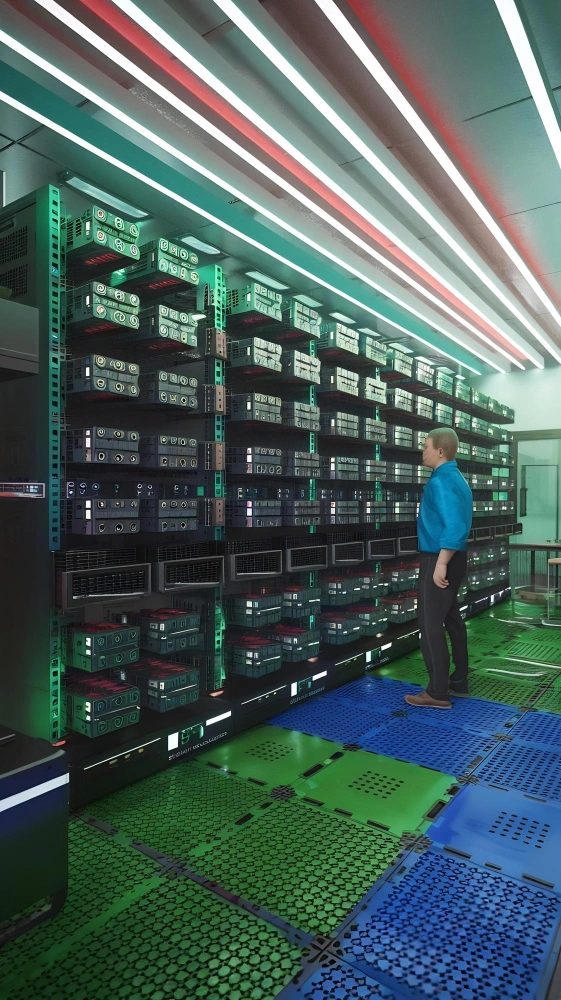
The headline number is big, but the logic behind it is the more important part. In today’s tech market, locking in access to dedicated compute clusters reduces operational uncertainty. For a company at Meta’s scale, training and serving AI models is a continuous, high-intensity operation. Any swing in hardware availability or power capacity can turn into product delays or unpredictable costs. Reserving infrastructure in advance is, in practice, a way to buy speed. It enables faster model iteration, reduces dependence on whatever capacity happens to be available in the open market, and makes it easier to absorb demand spikes without competing for scarce resources.
This is where Nebius becomes relevant. The company is headquartered in Amsterdam and focuses on delivering compute infrastructure purpose-built for artificial intelligence. Its positioning centers on an AI cloud platform designed for model training and inference workloads. Unlike the major cloud platforms that serve almost every type of enterprise use case, Nebius has chosen to concentrate on technology customers who need large amounts of GPU compute and high-performance networking to run AI programs at scale.
That focus fits a market shift that is becoming more visible: the rise of so-called neocloud providers. These companies build infrastructure optimized for AI workloads and often move faster when it comes to deploying new data centers, securing power, or designing clusters tailored to specific requirements. The business model looks simple on paper, but execution is hard. It means acquiring specialized hardware at scale, guaranteeing enough electrical capacity, operating cooling systems designed for dense compute, and then delivering reliable processing capacity with strong performance and availability.
Are you looking for developers?
The rapid growth in AI model training explains why this infrastructure is now strategic. As models become bigger and more ambitious, pressure on GPUs and internal data center networks increases sharply. In practice, real performance is not determined by the chip alone. Interconnect architecture, storage speed, orchestration capability, and the stability of long-running workloads all matter. That is why Nvidia remains central to the ecosystem. It is not only a supplier of accelerators, but also a platform provider whose hardware and networking stack helps customers scale high-performance environments more predictably.
For Meta, securing this kind of capacity is increasingly part of the core playbook. In AI, advantage often goes to the organizations that can shorten the gap between research and real deployment. More compute means more experiments, more training runs, and faster product cycles. When one company locks in multi-year resources, competitors are forced to decide whether they will make similar commitments or accept moving at a slower pace.
Still, infrastructure alone does not solve the whole problem. For many organizations trying to integrate AI into finance, retail, logistics, or healthcare, access to data centers is only the opening move. The real work begins when models must connect to the systems that run the business: enterprise platforms, databases, internal tools, and operating processes that cannot afford downtime. Without that integration, even a strong model can end up as little more than a polished demo.
Are you looking for developers?
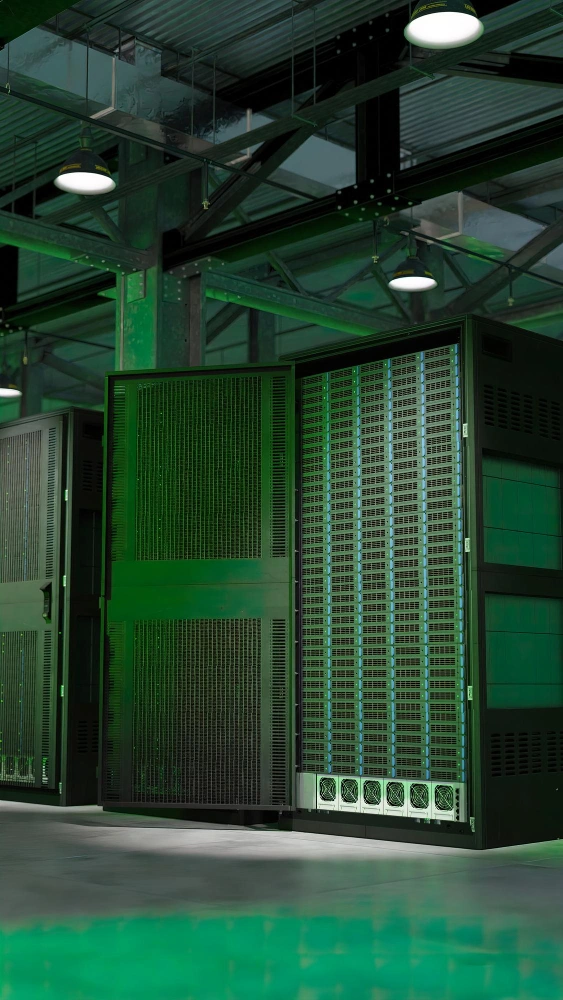
That is where the human side of engineering becomes decisive. Building solutions that work in real environments requires teams who can design durable software architectures, deliver dependable APIs, manage complex data flows, and keep systems stable as they scale. Square Codex, a Costa Rica based technology outsourcing company, operates in exactly that execution layer. Through nearshore software development teams, it supports North American companies in building digital platforms, integrating cloud systems, developing backends, and delivering data-driven solutions that connect AI capabilities to production workflows.
The takeaway is straightforward. AI competition is no longer defined only by who has the most advanced model or the most influential research. It is increasingly shaped by who can build and operate the infrastructure that makes those systems possible. The Nebius and Meta agreement is one more signal of how this race is evolving. In the new landscape, the organizations that combine access to infrastructure, power, and data centers with engineering teams capable of operating the full stack will have a meaningful edge when it is time to scale AI into real products and operations.