

AI in Game Development
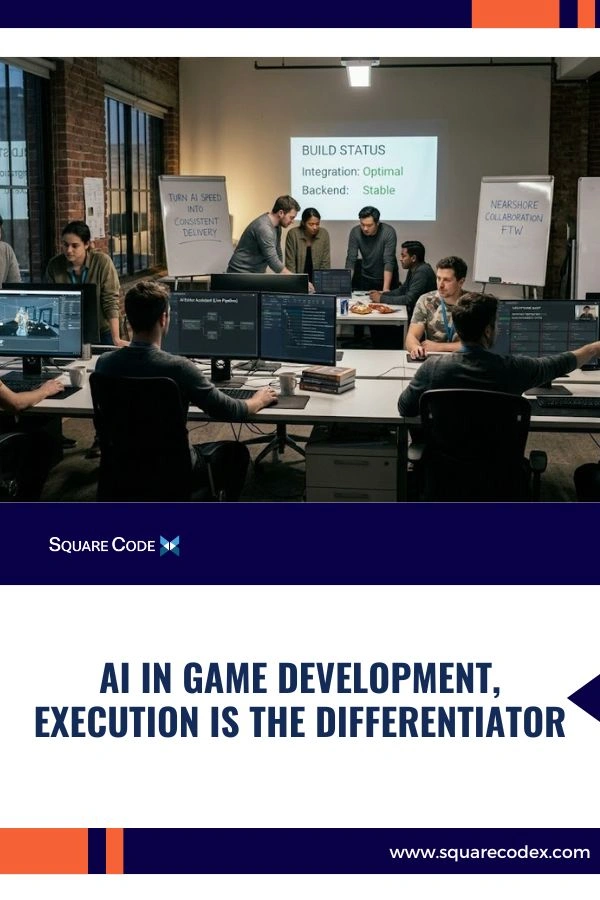
When a platform like Unity brings AI assistants into the editor, it is not just adding a flashy feature for demos. It is acknowledging a deeper shift in how modern games get built. AI is moving into daily production as an operational layer: guidance inside the workflow, fast generation of temporary assets to validate ideas, automation of repetitive tasks, and tooling that helps teams plan implementation without leaving the development environment. None of this makes game development easy, but it changes the pace at which a studio can iterate without derailing the schedule.
Game production stopped being a straight line a long time ago. Large projects live in tight cycles of test, adjust, and test again, with decisions made under pressure and with incomplete information. Art, design, engineering, audio, QA, and production push in parallel, and much of the real work happens in the messy edges: when a design tweak forces UI changes, when a “temporary” asset becomes permanent, when an optimization arrives late and triggers a chain of dependencies. That is where AI can help in a practical way. Not because it ships the game by itself, but because it reduces the cost of iteration: the time it takes to go from “let’s try this” to “we can see it running.”
Are you looking for developers?
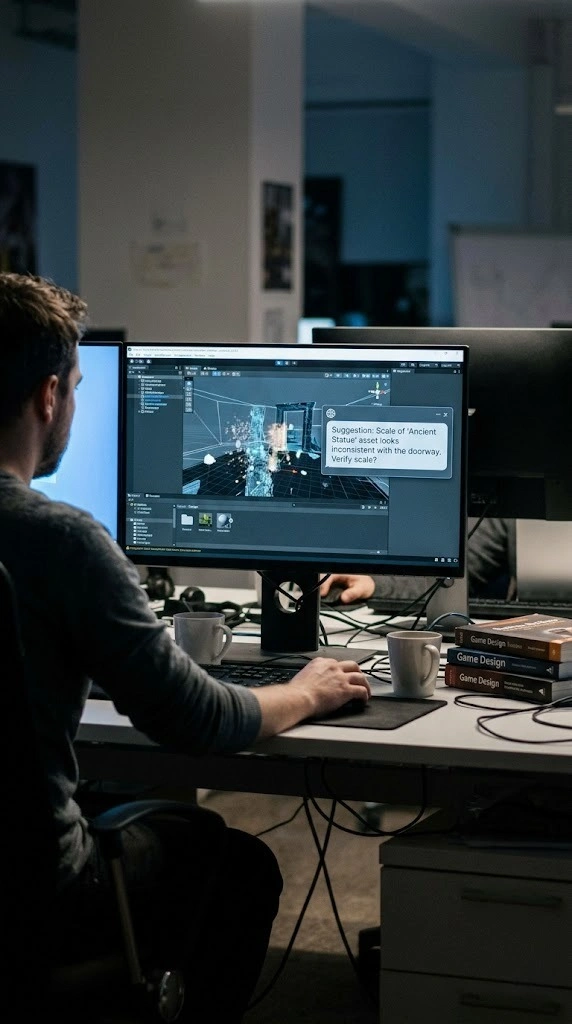
For creative teams, temporary asset generation is less about replacing final art and more about unlocking conversations. A useful placeholder makes scale, tone, and readability tangible without waiting weeks. For design, an assistant inside the editor that flags inconsistencies, validates dependencies, or suggests safe configurations can prevent quiet rework. For engineering, automating repetitive tasks and supporting implementation planning can save hours lost to small tickets, helper scripts, internal documentation, and refactors that nobody celebrates but everybody depends on.
The shift comes with a risky temptation: adding tools without structure. A studio can plug in assistants, connect external models, and speed up prototyping, and still end up slower if the pipeline is not ready. AI increases the volume and speed of changes, and it also increases the speed at which problems appear if controls are weak. In game development, the pipeline is the nervous system: asset import, build automation, versioning, testing, packaging, and the glue that connects it all to production environments. If that foundation is fragile, an assistant simply accelerates chaos.
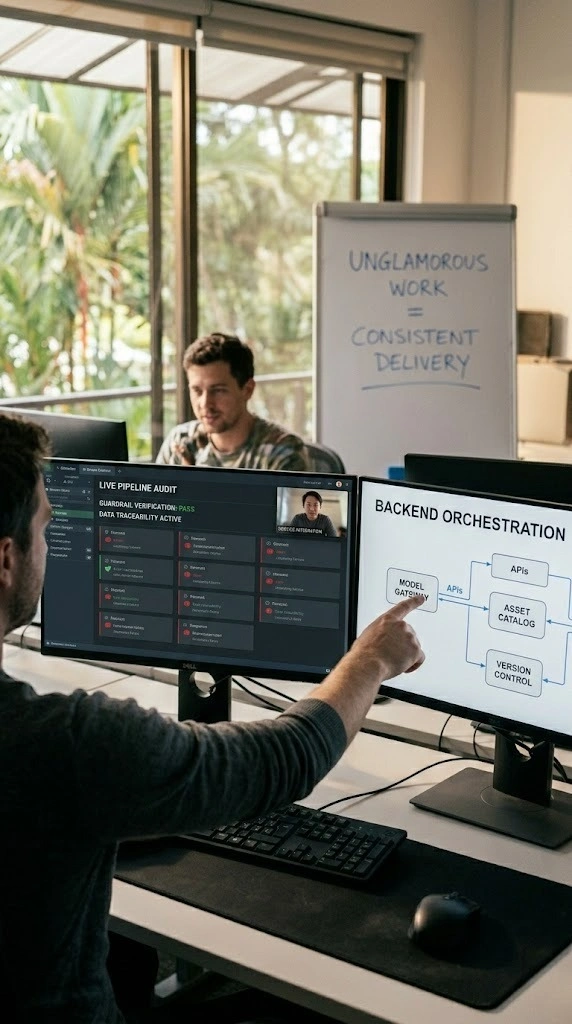
The real bottleneck is integration. For AI to work in a gaming environment, it needs to connect to existing tooling, internal conventions, and data with clear ownership. It is not “a model generating text.” It is orchestration: APIs that query asset catalogs, backend services that validate state, scripts that enforce naming rules, and traceability so teams can track what was generated, when, and under which constraints. Without that, AI becomes a neat plugin that does not survive the first heavy sprint.
Are you looking for developers?
In online games, the complexity grows quickly. Multiplayer systems, authentication, matchmaking, inventories, telemetry, and anti-cheat cannot be built on shortcuts. If an assistant proposes changes, those changes still have to follow the same standards as any serious release: integration with backend development, automated tests, security review, and observability to catch regressions early. Data flows matter too: economy, balance, player behavior, and product metrics. AI can help teams interpret signals and prepare adjustments, but only if the architecture supports those loops without breaking the game.
That is why execution remains the hard part. Integrating AI into gaming pipelines is more complex than it looks because studios operate with real constraints: launch windows, multiple platforms, performance budgets, certification requirements, and teams that are already stretched. There is also a talent gap that shows up in every hiring cycle. People who understand tooling, integration workflows, scalable systems, and production realities in game engines are not easy to find, and they are even harder to hire quickly. Many studios end up in the same place: the technology is available, the intent is there, but the capacity to implement it cleanly is missing.
This is where nearshore and staff augmentation become practical levers, not cost slogans. If the goal is to adapt to new tools without stalling production, studios need additional hands with context, integrated into the team’s cadence. A well-run nearshore model brings daily collaboration and time zone overlap, which enables fast iteration, same-day reviews, and continuous support when builds fail or pipelines break midweek. In gaming, that operational closeness matters.
Are you looking for developers?
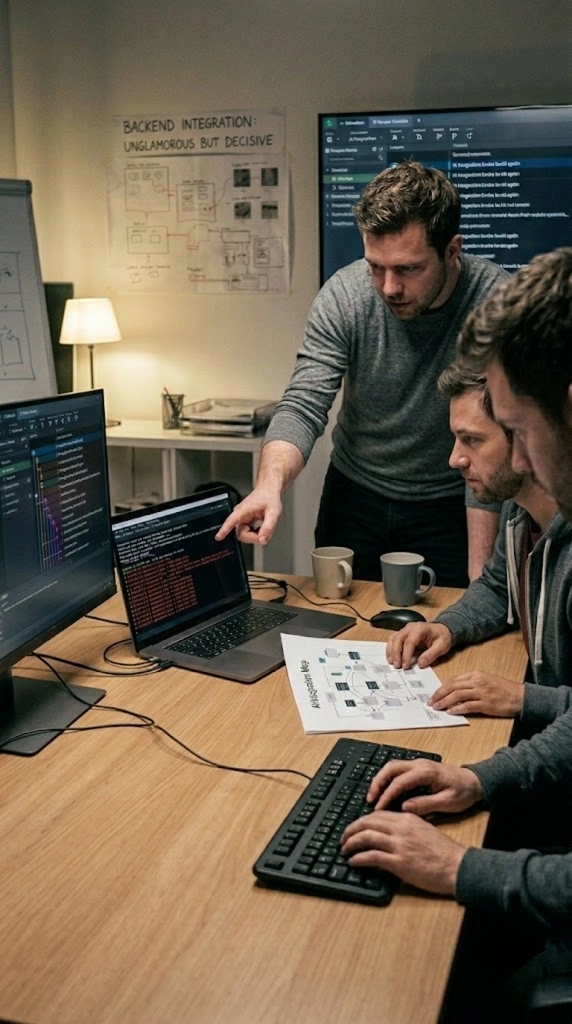
Square Codex fits into the stretch where AI stops being an idea and becomes real work. As a Costa Rica-based outsourcing company, it provides nearshore teams for North American companies that need to strengthen execution without reshaping their internal org. In gaming and software development, the value often sits in the unglamorous but decisive parts: backend, APIs, service integration, tooling, and pipeline improvements that help what is built inside the engine reach production environments reliably.
When a studio wants assistants inside the editor, external model integrations, or workflow automation, the risk is not “using AI.” The risk is losing control over how it is integrated. Square Codex works through staff augmentation that plugs into internal teams, repos, and processes, helping structure data flows, close integration gaps, and keep scalable systems stable in production. The goal is straightforward: turn AI-driven speed into consistent delivery, not into technical debt.