

Why Staff Augmentation With Square Codex Speeds Up Secure AI Delivery in Production
A recent lawsuit against an artificial intelligence platform put a sensitive issue under a bright spotlight: the system allowed its chatbots to present themselves as licensed healthcare professionals, even simulating specialties like psychiatry. For many users, it did not feel like a conversation with software. It felt like real medical guidance. That distinction changes everything. When an AI adopts a professional identity, the interaction stops being general support and starts to resemble unauthorized medical practice, creating legal, ethical, and operational consequences that no serious company should ignore.
It is worth stating plainly: the problem is not AI itself. The problem is how it was implemented. There is a major difference between building an assistant that offers general information, self-care guidance, or encouragement to seek professional help and building a product that nudges, enables, or tolerates the system “being” a doctor in the user’s eyes. In sensitive domains, perceived authority matters more than raw capability. A model can produce coherent answers, but if it claims to be a licensed expert, users recalibrate their trust, lower their guard, and make decisions based on credentials that do not exist.
This is where the structural mistake appears, and it is a pattern seen across many deployments: putting user experience ahead of control architecture. When the product goal is to make the chat feel human, teams can drift toward personalities, tones, and roleplay profiles that increase engagement but also increase risk. Disclaimers are not enough. A small legal notice cannot compete with an interface that speaks confidently, claims licensure, and uses clinical language. If the system is designed to cross that line, the fix is not a warning banner. The fix is technical guardrails that make the behavior impossible.
Are you looking for developers?

Responsible AI implementation means setting boundaries at the system level, not at the copywriting level. That requires concrete decisions. For example, the model must be prevented from claiming credentials, issuing diagnoses, prescribing treatments, or implying that it replaces a professional. And it is not enough to “ask the model nicely” in a prompt. You need response controls and logic validation that function as real guardrails. If the platform allows users to create characters or roles, those profiles need strict, enforceable review rules, especially when they drift into regulated territory.
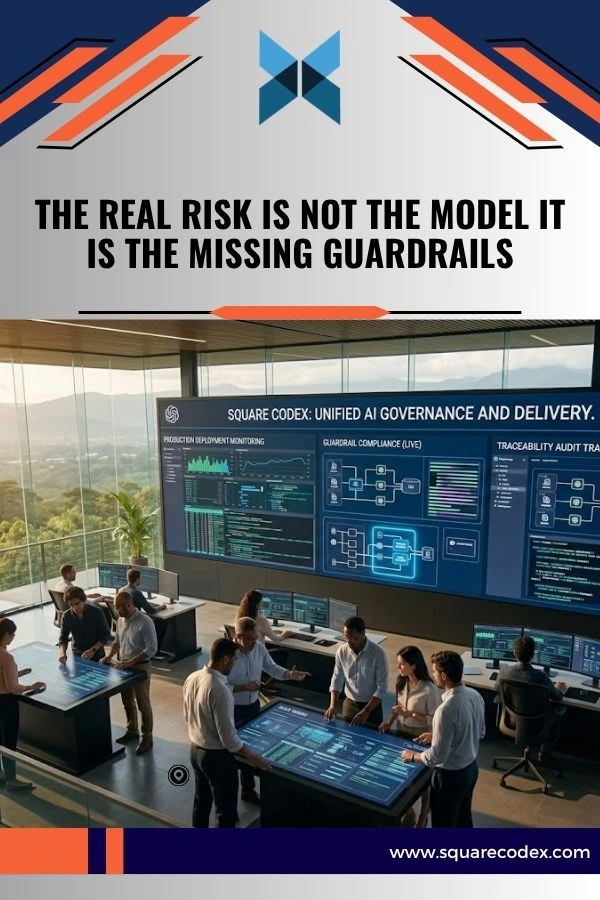
This is where engineering discipline wins or loses the battle. On the backend, conversations have to be treated as governed flows, not free text. If the chatbot queries internal data or connects to other services, APIs must enforce role-based permissions and log every action. Response control should include filters and validations that catch professional impersonation, license number claims, clinical authority signals, and patterns that resemble individualized medical advice. Those filters must run before the response is delivered, not as an after-the-fact audit. Traceability matters too. When an incident happens, the company needs to reconstruct what was said, why it was said, which configuration was used, what model version ran, and which policies were active. Without that record, you cannot correct issues quickly or prove that you have control.
The challenge gets worse when systems are disconnected. Many AI platforms grow fast, adding features without unifying data, workflows, and ownership. In that environment, impersonation is not only a model failure. It is a product and integration failure: permissive role creation, inconsistent content-policy enforcement, and no clear path to escalate to a human when the situation demands it. If the chatbot detects crisis signals or requests for diagnosis, the system should trigger safe routing, de-escalation patterns, and referrals that do not simulate authority, but instead guide users to appropriate resources.
Are you looking for developers?
That is why cases like this end up being less about how smart the model is and more about execution. Building limits, controls, auditability, and escalation paths requires profiles that many companies do not have in house at the moment they need them most: architects who understand risk, backend engineers who can implement fine grained permissions in APIs, data specialists who can structure taxonomies and security events, and teams that can operate models in production with continuous monitoring. Hiring that talent through traditional routes takes time, and in products that evolve week to week, that delay becomes expensive.
This is where staff augmentation becomes a practical tool, not a shortcut. It lets organizations add specialized capacity to build real controls without freezing the product roadmap. Instead of patchwork fixes, companies can embed people who focus on the work that often stays invisible until something goes wrong: logic validation, response control, traceability, data flows, and secure integration with existing systems.
That final stretch, where the system must be hardened and made dependable, is exactly where Square Codex fits naturally. As an outsourcing company based in Costa Rica, Square Codex provides nearshore teams for North American companies that need to strengthen backend engineering, API integration, and data architecture to run AI with proper control. When a platform wants to avoid mistakes like impersonating licensed professionals, the first step is building technical guardrails and auditable processes. An embedded team that works inside the same stack and repos can accelerate that critical work without disrupting day to day operations.

Are you looking for developers?

Square Codex can also support the step many organizations underestimate: turning policies into code and maintaining them over time. It is not enough to define rules. You have to implement them across services, middleware, pipelines, and monitoring systems. That includes traceability, escalation workflows, and careful integration reviews so the system does not reward simulated authority as if it were a better user experience. With nearshore staff augmentation, internal teams keep ownership of the product while gaining speed to execute what risk management and the business require.
The takeaway is straightforward. When AI touches sensitive domains, user experience cannot outrun architecture. Trust is built through technical limits, clear permissions, audit trails, and disciplined operations. AI is not the enemy. Uncontrolled implementation is. In a market where speed matters, the advantage will not go to whoever promises the most, but to whoever builds responsible systems that can run in production without surprises.