What It Means for Industrial Automation
Siemens is bringing artificial intelligence closer to the machines that make, move, and inspect physical products. Its latest industrial AI developments span a robot application for unpacking deliveries, software agents for production planning, and AI models operating alongside factory control systems.
Together, they illustrate a shift from AI that analyzes production information to AI designed to participate in industrial workflows. The challenge is not simply making a model capable of interpreting a factory floor. It is connecting that intelligence to equipment, validated decisions, and reliable software.
At its Electronics Factory in Erlangen, Siemens is developing a robotic application for unpacking incoming deliveries. Cartons arrive in different sizes and packaging formats, making the task difficult for fixed robot programs. As a result, unpacking remains largely manual.
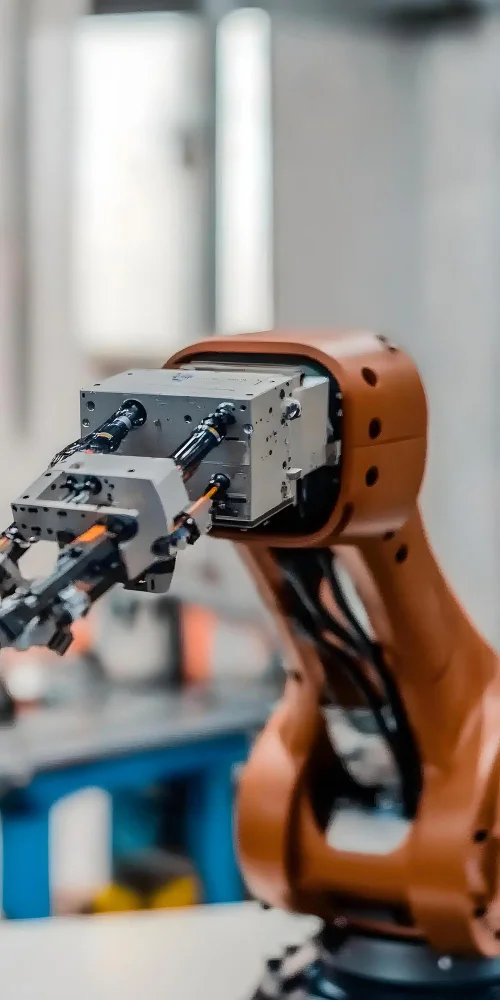
The proposed approach uses cameras to capture the surrounding scene in real time. Robot foundation models then interpret what they see and determine how to open cartons and remove component reels. Siemens brings together its automation and control technology, industrial PCs, and software orchestration to support the application.
Are you looking for engineers?
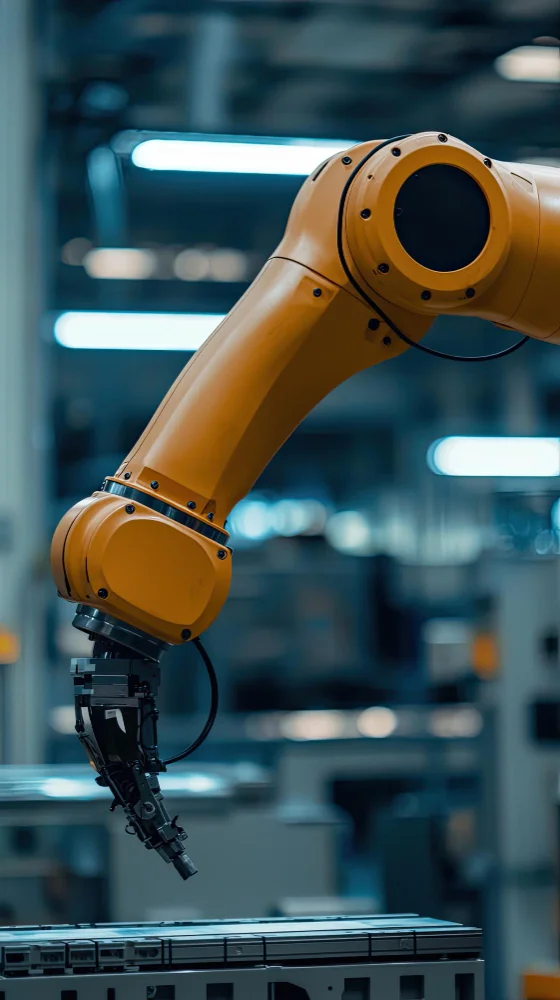
Unlike a repetitive operation with standardized objects, this task asks machines to respond to variation. Computer vision must identify what is present, while robotic manipulation must translate that interpretation into physical movement. The project is a development effort, not evidence of a fully autonomous, large-scale deployment.
Siemens is also developing an Autonomous Production Planner within Intelligence Centre X. Multiple AI agents generate production schedules and optimize them against defined key performance indicators. Crucially, a proposed schedule must pass validation in a physics-based digital twin before release to production. That simulation step matters because a mathematically appealing schedule may still conflict with real machine and process constraints.
Siemens expects the approach to reduce manual planning effort by up to 70% and costs by up to 20%. These are projected benefits, not measured results from a completed operational rollout.
A related tool, the Eigen Engineering Agent, connects with TIA Portal and can verify automation code through simulation. Siemens describes simulation-based verification as available, while AI-generated safety configurations remain a planned capability. The distinction shows how industrial automation advances through staged validation rather than a single leap to autonomy.
Are you looking for engineers?
The Industrial AI Suite addresses another piece of the puzzle: connecting model inference directly to factory automation. It runs AI models on Industrial Edge and connects them with SIMATIC controllers through PROFINET.
This places AI inference within the machine automation control loop rather than treating it solely as analysis conducted in a distant application. It creates opportunities for closer interaction between observed conditions and control processes, but also demands careful integration and predictable behavior.
Siemens describes an on-premises workflow in which production data can be used to retrain models, then validate and redeploy them within the plant. Retraining therefore does not require production data to leave the facility.
That architecture is relevant to operators concerned with control over industrial information. It does not, by itself, establish performance improvements or guarantee that every implementation will meet a facility’s operational needs.
Across these Siemens initiatives, the common challenge is software integration. A vision model needs current sensor information. A planning agent needs accurate production data and a realistic simulation. Machine-level inference must communicate dependably with existing controllers.
Behind those interactions sit data pipelines, backend services, orchestration tools, model lifecycle management, and infrastructure capable of supporting testing and updates. Engineers must also account for failures, unavailable data, changing equipment conditions, and the interactions between software and physical processes.
Are you looking for engineers?
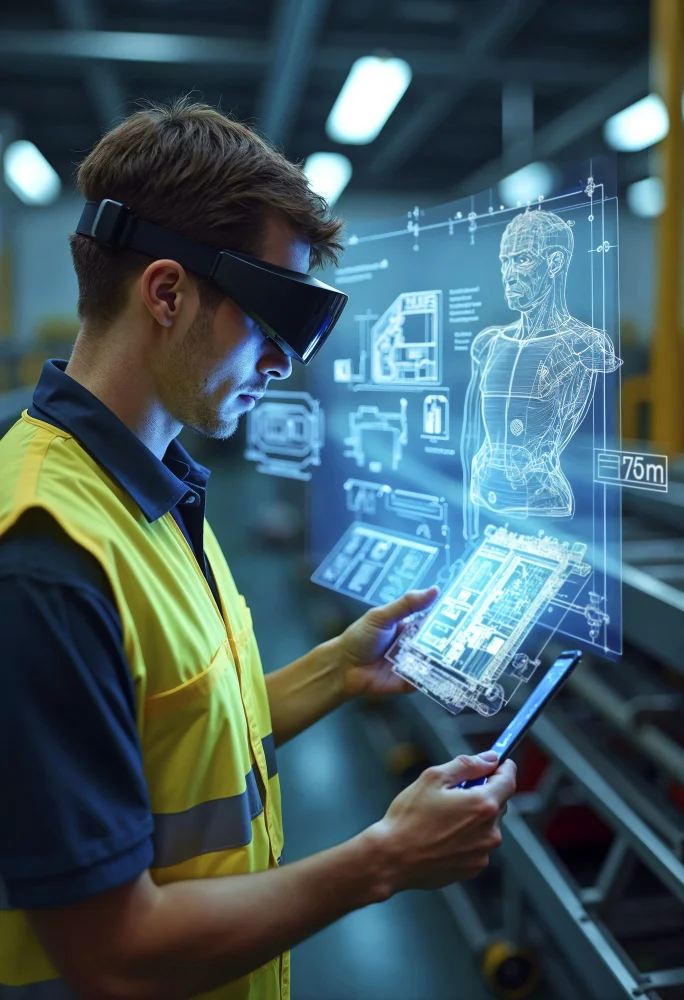
Cybersecurity belongs in the same discussion. Siemens points to nearly 40 years of industrial cybersecurity experience, but connecting agents and models to industrial systems still raises questions about access permissions, system boundaries, and accountability.
Simulation, controlled deployment, monitoring, and human review can help manage risk. None removes the need for qualified industrial specialists or appropriate controls when software influences physical operations.
These developments also illustrate why manufacturers and technology companies may need additional software engineering capacity as they modernize connected systems.
Square Codex, a Costa Rica-based nearshore software development partner serving North American companies, can complement internal engineering teams through custom applications, backend and API integration, data engineering, cloud development, DevOps, AI application integration, and QA automation.
That role concerns building maintainable applications, dependable data flows, and testing processes around complex operations. It does not imply that Square Codex develops Siemens robotics, supplies industrial controllers, or has implemented the technologies described here.
Siemens’ work points toward industrial AI that can interpret physical environments, support scheduling decisions, and operate closer to machines. Whether these approaches become dependable parts of daily production will depend on validation, cybersecurity, existing equipment, and the software connecting them. The important advance is not intelligence alone, but the engineering that makes its actions understandable and controllable.
Are you looking for engineers?
Software Architecture Helps Control the Variables
The software surrounding an AI model influences its operating economics. Reliable APIs, backend services, and data pipelines can reduce unnecessary duplication and make applications easier to maintain. Monitoring can show where requests fail, how usage changes, and which workflows consume the most resources.
Organizations may also benefit from keeping model integrations flexible. An architecture that separates application logic from a particular provider can make it easier to evaluate alternatives when pricing, capabilities, or business requirements change. That flexibility has engineering costs of its own and should be justified by the product’s needs.
Security controls, QA automation, and DevOps practices add further discipline. They help teams release changes, detect regressions, and investigate unexpected behavior without assuming that model improvements alone will solve application problems.
For companies expanding these capabilities, Square Codex can complement internal teams. The Costa Rica-based nearshore software development and staff augmentation partner serves North American businesses through custom software, backend and API development, data engineering, cloud engineering, AI integration, and QA automation. Its role is engineering support, not investment advice or a claim of involvement with Anthropic.
Anthropic’s share-price retreat has brought attention to the distance between expected AI profits and the cost of delivering them. For enterprises, the most useful response is not to follow every market swing. It is to build AI systems whose quality, operating costs, and business results can be measured over time.